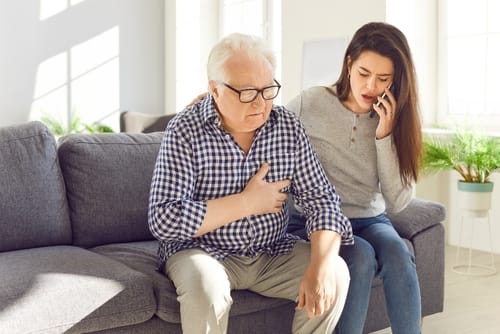
Imagine you’re on scene with a patient whose heart is racing at 200 beats per minute — or another whose heart rate has plummeted to 40 beats per minute, leaving them pale and only semi-conscious. Cardiovascular emergencies are rarely straightforward; a simple "stomach ache" in a diabetic patient could actually be a silent, life-threatening STEMI. Would you know when to reach for the defibrillation pads, when to use a modified vagal maneuver, or how to assess a patient when you can’t find a pulse because of a mechanical pump? In this course, we’ll cover all these topics and more.
Course Type: Full-length Course
Course Duration: 60 min
Heart disease has been the leading cause of death in the world for over a century – and the numbers are climbing. When you respond to a call for chest pain or even shortness of breath, you should have a high index of suspicion that you may be dealing with an acute coronary syndrome (ACS). Throughout this course, we’ll discuss how to catch these events early and what to do to ensure the patient has the best possible outcome.
Course Type: Full-length Course
Course Duration: 60 min
While unaided, manual CPR has been done for a long time and has saved many lives. Now, devices are available to increase survivability and benefit patients in need of this life-saving maneuver. Throughout this course, we will compare the results of device-aided CPR to manual unaided, as well as discuss the effects of CPR on the body.
Course Type: Full-length Course
Course Duration: 60 min
Correctly using an AED can double or triple the patient’s chance of survival. They have a long history and with modern advancements, they’ve come a long way; their capabilities may even surprise you. Be prepared for your next cardiac arrest call and know what your device can and cannot do.
Course Type: Full-length Course
Course Duration: 60 min
This course will discuss treating cardiac emergencies in the pre-hospital environment. Topics discussed include predicting patient flow, the cardiovascular system, pit crew CPR, cardiac arrest strategies, cardiac arrest drugs, dysrhythmia, ACLS, what to do if the rhythm is too slow or too fast, and other cardio vascular diseases.
Course Type: Full-length Course
Course Duration: 60 min
It is critical for EMS providers to have an understanding of the ways chest pain can present between men and women. Too often, chest pain and heart attacks in female patients can go untreated and undiagnosed. This course will examine the similarities and differences men and women experience with angina and the differences in causes.
Course Type: Full-length Course
Course Duration: 60 min
It is critical for EMS providers to have an understanding of the ways chest pain can present between men and women. Too often, chest pain and heart attacks in female patients can go untreated and undiagnosed. This course will examine the similarities and differences men and women experience with angina and the differences in causes.
Course Type: Full-length Course
Course Duration: 60 min
Imagine you’re on scene with a patient whose heart is racing at 200 beats per minute — or another whose heart rate has plummeted to 40 beats per minute, leaving them pale and only semi-conscious. Cardiovascular emergencies are rarely straightforward; a simple "stomach ache" in a diabetic patient could actually be a silent, life-threatening STEMI. Would you know when to reach for the defibrillation pads, when to use a modified vagal maneuver, or how to assess a patient when you can’t find a pulse because of a mechanical pump? In this course, we’ll cover all these topics and more.
Course Type: Full-length Course
Course Duration: 60 min
Imagine you’re on scene with a patient whose heart is racing at 200 beats per minute — or another whose heart rate has plummeted to 40 beats per minute, leaving them pale and only semi-conscious. Cardiovascular emergencies are rarely straightforward; a simple "stomach ache" in a diabetic patient could actually be a silent, life-threatening STEMI. Would you know when to reach for the defibrillation pads, when to use a modified vagal maneuver, or how to assess a patient when you can’t find a pulse because of a mechanical pump? In this course, we’ll cover all these topics and more.
Course Type: Full-length Course
Course Duration: 60 min
In this webinar, learners will be introduced to extracorporeal membrane oxygenation (ECMO) and its broad applications. It is a well-established therapy, and its use is becoming more widespread. Most tertiary facilities have ECMO programs and capability. EMS personnel could be called on to transport these critically ill patients, and this lecture provides a broad overview. ECMO has been used in the field as a resuscitative adjunct. In the future, it is possible that some centers in the United States may consider this option. In this course, Dr. Misselbeck also provides a provocative look at the potential of this emerging technology for the future.
Course Type: Full-length Course
Course Duration: 60 min
Strokes have a time critical diagnosis which makes practicing the proper prehospital care important to ensure patients are receiving life saving care. In this course, Dr. Eric Cortez discusses what a stroke is, what steps to take to identify a stroke, and how to prepare while transporting the patient to a hospital. By making sure a hospital is prepared to take on a stroke patient, EMS will be able to help shave off time from the occurrence to the time the patients are able to receive treatment. Dr. Cortez also discusses the types of strokes, their symptoms, and their various treatments.
Course Type: Full-length Course
Course Duration: 60 min
When there’s a life-threatening cardiac emergency, time is of the essence. 12-lead ECGs are useful diagnostic tools, but clinicians must be able to accurately and quickly identify life-threatening emergencies. This course will discuss ECG interpretation in the prehospital environment and give the learner practice interpreting sample ECGs.
Course Type: Full-length Course
Course Duration: 60 min